What Is Multi-Gig Internet and Who Actually Needs It?
Learn what multi-gig internet is, how it compares to gigabit internet, who needs it, and whether upgrading is worth the extra cost.
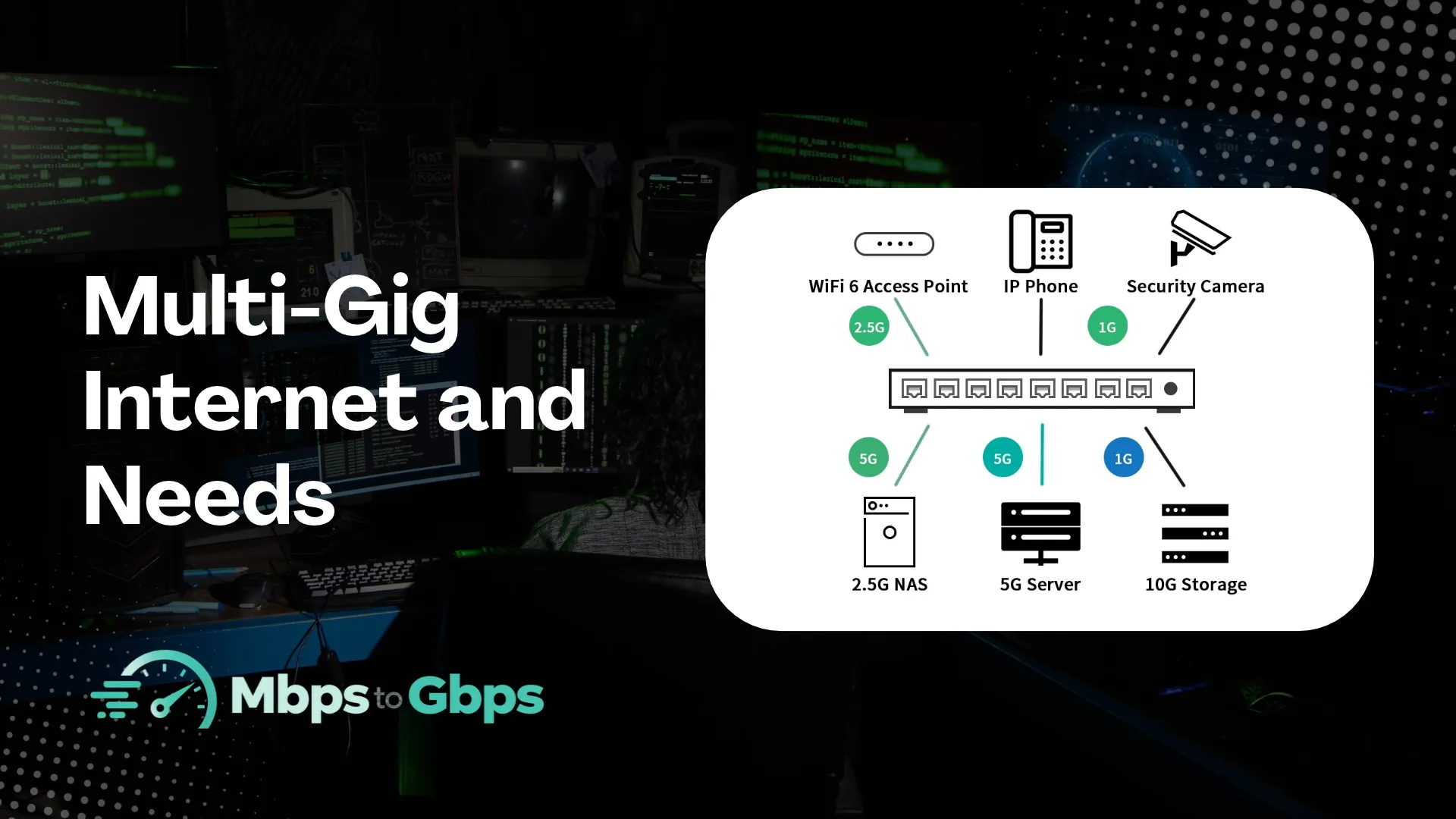
Internet speeds have come a long way, and many providers now offer plans that deliver 2 Gbps, 5 Gbps, or even 10 Gbps. These connections, known as multi-gig internet, promise faster downloads, quicker uploads, and more bandwidth for demanding online activities.
However, paying for higher speeds doesn’t always mean you’ll notice a difference in your daily internet use. The real question is whether multi-gig internet fits your needs or if a standard gigabit connection is already enough.
What Is Multi-Gig Internet?
Multi-gig internet is an internet connection that offers speeds greater than 1 gigabit per second (Gbps). Common plans include 2 Gbps, 2.5 Gbps, 5 Gbps, and 10 Gbps.
To understand these speeds, remember that 1 Gbps equals 1,000 Mbps. A 2 Gbps plan, for example, offers twice the advertised maximum speed of a 1 Gbps plan.
Multi-gig internet can make large downloads and uploads faster, especially when your devices and network equipment support those speeds. However, your actual speed also depends on your internet provider, router, connected devices, and the server you’re accessing.
Multi-Gig Internet vs. Gigabit Internet
The main difference is speed. Gigabit internet offers speeds up to 1 Gbps, while multi-gig plans provide speeds above 1 Gbps.
Here’s how they compare:
Typical speeds: Gigabit offers up to 1 Gbps, while multi-gig plans offer 2 Gbps, 5 Gbps, 10 Gbps, or more.
Large downloads: Both are fast, but multi-gig can download large files faster.
File uploads: Speeds depend on the plan’s upload capacity, but multi-gig can offer faster uploads.
Multiple devices: Gigabit suits most households, while multi-gig provides more bandwidth for demanding activities happening simultaneously.
Equipment: Gigabit requires gigabit-compatible equipment, while multi-gig may require compatible routers, ports, and network adapters.
Cost: Gigabit plans are generally cheaper, while multi-gig plans often cost more.
For most households, gigabit internet is enough for streaming, gaming, video calls, and browsing. Multi-gig is more useful for heavy internet users who regularly transfer large files or need more bandwidth.
Remember that faster internet doesn’t automatically improve every activity. Online gaming, for example, depends more on low latency and connection stability than raw download speed.
Who Needs Multi-Gig Internet?
Multi-gig internet is most useful for people who regularly need more bandwidth than a standard gigabit connection can provide. The following users are more likely to benefit from upgrading.
1. Large Households With Many Connected Devices
Large households may have several people streaming videos, downloading files, attending video meetings, and using smart devices at the same time. These activities can compete for available bandwidth.
A multi-gig connection provides more total bandwidth for demanding simultaneous activities. This can be helpful when a gigabit connection frequently becomes a bottleneck.
However, the number of connected devices alone doesn’t mean you need multi-gig internet. Most smart home devices use very little bandwidth, and many households can manage their daily activities with a gigabit plan or less.
2. Content Creators and Professionals Who Transfer Large Files
Video editors, photographers, designers, and other professionals often work with large files. Uploading video projects, transferring backups, and downloading work files can take considerable time.
A multi-gig connection can reduce transfer times when your internet plan provides higher upload or download speeds and the remote server supports them.
For example, someone who regularly uploads large video projects may benefit from a plan with faster upload speeds. Before upgrading, check both download and upload speeds because not every multi-gig plan offers equally fast performance in both directions.
3. Gamers Who Frequently Download Large Games
Gamers who regularly download large games can benefit from multi-gig internet. Some modern games can exceed 100 GB in size, and a faster connection can reduce download times when the game servers and your equipment support those speeds. It can also help when downloading other large files.
However, faster internet doesn’t necessarily improve in-game performance. Online gaming depends more on low latency and connection stability. If you mainly play online and rarely download large files, gigabit internet may be enough.
4. Home Labs and Advanced Network Users
Some users run home servers, virtual machines, network storage systems, or other demanding setups. These environments may involve frequent transfers of large amounts of data between devices and online services.
Multi-gig internet can help when these activities require high-speed internet access. However, transfers between devices on the same local network depend on your local network equipment, not your internet plan alone.
If your setup involves frequent large transfers, make sure your router, Ethernet ports, network adapters, and storage devices can support the speeds you want.
5. Businesses With High Bandwidth Demands
Businesses that regularly upload large files, back up data to the cloud, or support many employees working online may benefit from multi-gig internet.
The additional bandwidth can help multiple users perform demanding tasks simultaneously. It may also reduce waiting times for large file transfers.
Still, businesses should consider upload speed, reliability, service-level agreements, and the number of users before choosing a plan. A faster connection isn’t always the best option if the existing connection already meets the company’s needs.
Who Doesn’t Need Multi-Gig Internet?
Multi-gig internet isn’t necessary for everyone. A gigabit or slower plan may be sufficient if you mainly use the internet for:
Casual browsing and social media: Reading websites, checking emails, and scrolling through social platforms don’t require multi-gig speeds.
Streaming videos: Most households can stream high-quality video on multiple devices without a multi-gig connection.
Video calls and remote work: Stable internet with sufficient bandwidth is usually more important than speeds above 1 Gbps.
Online gaming: Low latency and connection stability generally matter more than multi-gig download speeds.
Basic smart home use: Smart speakers, lights, and many other connected devices use relatively little bandwidth.
If your current connection handles your activities without frequent slowdowns, upgrading to multi-gig internet may not provide enough additional value to justify the cost.
Is Multi-Gig Internet Worth the Cost?
Multi-gig internet may be worth the extra cost if you regularly upload large files, handle demanding online tasks, or have multiple users competing for bandwidth.
However, multi-gig plans often cost more and may require compatible equipment, such as a router, Ethernet ports, and network adapters. Your devices must also support multi-gig speeds to take full advantage of the connection.
Before upgrading, consider these questions:
Does your current connection fluctuate with demanding activities?
Do you frequently transfer large files?
Do multiple users need high bandwidth simultaneously?
Can your equipment support multi-gig speeds?
Is the extra cost worth the benefits?
If your current plan meets your needs, gigabit internet or a slower plan may be sufficient.
Final Words
Multi-gig internet offers speeds beyond 1 Gbps and can be useful for heavy internet users, content creators, and households with demanding network needs. However, faster speeds don’t automatically mean a better connection for everyone.
Before upgrading, consider your daily internet activities, current connection performance, equipment, and budget. If your existing plan already handles your needs comfortably, you probably don’t need to pay extra for multi-gig internet.